
What Measurements Do I Need When Replacing a Medical Caster?
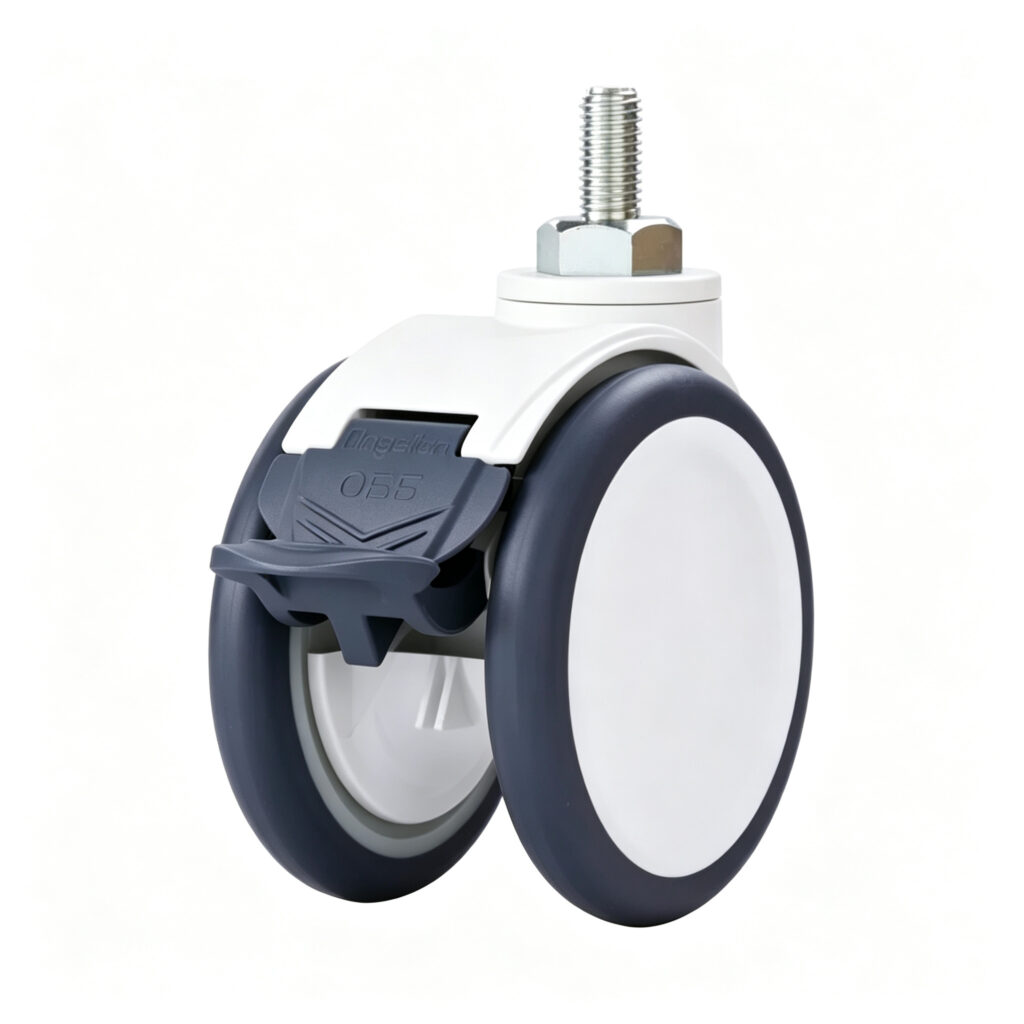
Choosing a replacement medical caster is not simply a matter of matching the wheel diameter. Medical equipment can use different caster mounting systems, wheel sizes, brake mechanisms, and load requirements.
Taking the correct measurements before ordering can help you find a compatible replacement and prevent installation problems.
Why Do Medical Caster Measurements Matter?
A caster must match the equipment’s mounting structure and operating requirements. Even a small difference in the mounting dimensions can prevent the caster from fitting correctly.
The replacement should also provide sufficient load capacity and maintain an appropriate equipment height.
1. Measure the Wheel Diameter
Start by measuring the diameter of the wheel.
Place a measuring tape or ruler across the wheel from one outside edge to the opposite edge, passing through the center.</p >
Common medical caster sizes include 4-inch, 5-inch, and 6-inch wheels, although many other sizes are available.</p >
Record the measurement in millimeters or inches.
2. Measure the Wheel Width
Wheel diameter alone is not enough.
Measure the width of the wheel from one side to the other. Wheel width can affect the available clearance inside the caster fork and may influence the load capacity and rolling characteristics.
Record the actual wheel width rather than estimating it from the overall caster width.
3. Measure the Overall Caster Height
Measure the distance from the mounting point to the bottom of the wheel.
This dimension is important because the caster contributes to the overall height of the medical equipment.
A replacement caster that is too tall or too short could change the working height of a hospital bed, cart, stretcher, or other medical equipment.
4. Measure the Stem
If the caster uses a stem mount, measure the stem carefully.
Important stem dimensions may include:
- Stem diameter
- Stem length
- Thread diameter
- Thread pitch
- Threaded section length
- Stem shape
For threaded casters, matching the thread diameter and pitch is essential. A stem that appears similar may still not fit the equipment correctly.
5. Measure the Mounting Plate
If your medical caster uses a top plate instead of a stem, measure the mounting plate.
Record:
- Plate length
- Plate width
- Mounting hole diameter
- Distance between mounting holes
- Hole pattern
Measure from the center of one mounting hole to the center of the opposite hole when determining bolt-hole spacing.
6. Check the Mounting Hole Pattern
The hole pattern is one of the most important specifications for plate-mounted medical casters.
Even when two mounting plates have similar dimensions, their hole spacing may be different.
Before ordering, compare the existing hole pattern with the replacement caster’s technical drawing or specification sheet.
7. Measure the Brake and Locking Mechanism
If your equipment uses locking casters, identify how the brake operates.
Medical equipment may use different systems, including:
- Total locking brakes
- Directional locking brakes
- Central locking systems
- Individual pedal brakes
The brake pedal position and locking mechanism may also affect compatibility, particularly on hospital beds and other equipment with limited clearance.
8. Check the Wheel Type
Determine whether the caster uses a single wheel or twin-wheel configuration.
Also inspect the wheel material. Medical casters may be designed for quiet operation, floor protection, high load capacity, or frequent movement.
Replacing a twin-wheel caster with a single-wheel design may change the load distribution and overall performance of the equipment.
9. Determine the Required Load Capacity
Do not overlook load capacity when replacing a medical caster.
Consider the total weight of the equipment plus the maximum expected load, including patients, supplies, or accessories where applicable.
The caster’s rated capacity should be appropriate for the actual application. When four casters support an item, you should not automatically assume that the total rated capacity is simply four times the rating of one caster because real-world load distribution may not be perfectly even.
10. Check the Caster Swivel and Clearance
Measure or inspect the available clearance around the caster.
The caster needs enough space to swivel and roll without contacting the bed frame, equipment structure, brake linkage, or other components.
This is particularly important when replacing an original caster with a different design.
Medical Caster Measurement Checklist
| Measurement | Why It Matters |
|---|---|
| Wheel diameter | Determines wheel size and affects equipment height |
| Wheel width | Helps confirm wheel and fork compatibility |
| Overall height | Maintains the correct equipment height |
| Stem diameter | Ensures the stem fits the mounting socket |
| Stem length | Ensures proper insertion depth |
| Thread size | Required for threaded mounting systems |
| Mounting plate size | Confirms plate compatibility |
| Hole spacing | Ensures mounting holes align |
| Brake type | Ensures correct locking functionality |
| Load capacity | Ensures the caster is suitable for the application |
Should I Measure the Caster or the Equipment?
Whenever possible, measure the original caster after removing it from the equipment, while also checking the mounting interface on the equipment itself.
Measuring both helps prevent mistakes caused by hidden mounting components or inaccurate measurements taken while the caster is installed.
If removing the caster is not practical, take measurements from the visible mounting area and provide clear photos to the caster supplier.
Should I Replace All Medical Casters at Once?
It depends on the equipment and the condition of the casters.
If only one caster is damaged, replacing a single caster may be possible when an identical or fully compatible replacement is available. However, the replacement should match the other casters in wheel size, height, mounting configuration, and functional characteristics.
For equipment with a central locking system or other coordinated caster design, compatibility between all casters is especially important.
What Should I Send to a Medical Caster Supplier?
If you are unsure which caster to order, prepare the following information:
- Photos of the original caster
- Photos of the mounting connection
- Wheel diameter
- Wheel width
- Overall caster height
- Stem or mounting plate dimensions
- Mounting hole spacing
- Brake type
- Equipment type and model
- Part number or manufacturer information, if available
Providing both measurements and photos usually makes it much easier to identify a suitable replacement.
Final Thoughts
The most important rule when replacing a medical caster is to match the complete specification rather than just the wheel size.</p >
Before ordering, check the wheel diameter, wheel width, overall height, mounting type, stem or plate dimensions, hole pattern, brake system, and load capacity.
Taking a few extra measurements can save time and help you avoid purchasing a caster that looks similar but does not actually fit your medical equipment.
Frequently Asked Questions
What is the most important measurement when replacing a medical caster?
The mounting dimensions are critical because they determine whether the caster can physically attach to the equipment. Wheel diameter and overall height are also important.
How do I measure caster wheel diameter?
Measure straight across the wheel from one outer edge to the opposite edge through the center of the wheel.
How do I measure caster stem size?
Measure the stem diameter and length. For threaded stems, also measure the thread diameter and thread pitch.
Do I need to know the caster load capacity?
Yes. The replacement caster should have an appropriate load rating for the total equipment weight and expected working load.
Can I identify a medical caster using photos?
Photos can help identify the caster design, but measurements are usually needed to confirm compatibility. A clear photo of the caster and mounting area combined with accurate measurements provides much better information.
Related Articles
- How Do I Identify My Hospital Bed Caster?
- Can I Use Universal Casters on a Hospital Bed?
- How Do I Find the Correct Replacement Caster for a Hospital Bed?
- Can I Replace Just One Medical Caster?
- Can I Replace Hospital Bed Casters Myself?
- Medical Caster Mounting Types: Plate vs Stem vs Threaded
- Best Silent Medical Casters for Healthcare Equipment
- How Often Should Medical Casters Be Replaced?
- How to Replace Hospital Bed Casters
- How to Choose Medical Casters
- Central Locking Casters vs Total Lock Casters
- How Much Weight Can Medical Casters Hold?
- Medical Caster Maintenance Guide
- Medical Casters Spotlight
- Are Twin-Wheel Casters Worth It?
- What Caster Wheels Do Hospitals Use?
- Hospital Bed Caster Replacement Guide
- Best Medical Caster Wheels for Hospital Beds

 English
  Japanese