
Medical Caster Mounting Types: Plate vs Stem vs Threaded
Choosing the right medical caster is not only about wheel diameter, load capacity, or wheel material. The mounting method is equally important because it determines whether the caster can be securely installed on the medical equipment.
Common medical caster mounting types include plate mount, stem mount, and threaded stem. Each design is suitable for different types of hospital beds, medical carts, stretchers, and healthcare equipment.
This guide explains the differences between these mounting systems and how to choose the right medical caster mounting type for your application.
What Is Medical Caster Mounting?
Caster mounting refers to the interface used to attach a caster assembly to a piece of equipment. The mounting connection must be strong enough to support the equipment load while allowing the caster to swivel and move safely.
A caster with the correct wheel size but the wrong mounting configuration may not fit the equipment or may not provide adequate structural support. </p >
Common Medical Caster Mounting Types
The three mounting configurations most commonly encountered in medical equipment applications are:
- Plate mount
- Stem mount
- Threaded stem mount
The correct choice depends on the equipment’s mounting interface, available space, load requirements, and whether the caster needs to be removable or adjustable.
1. Plate Mount Medical Casters
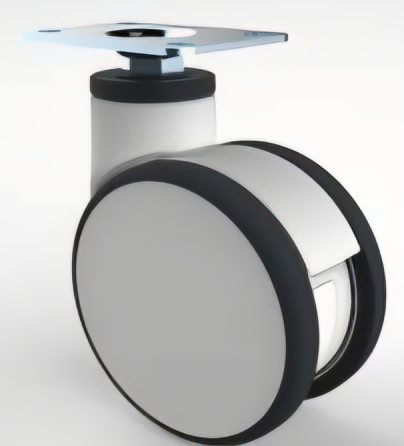
Plate mount casters use a flat mounting plate attached to the top of the caster. The plate normally contains multiple mounting holes through which bolts or other fasteners secure the caster to the equipment.
This design provides a relatively large mounting footprint and can provide strong mechanical attachment when the equipment frame is designed for a plate connection.
Advantages of Plate Mount Casters
- Large mounting contact area
- Strong and stable attachment
- Suitable for heavier equipment
- Easy to inspect and replace
- Available in different plate sizes and hole patterns
Common Applications
- Hospital beds
- Patient stretchers
- Heavy medical carts
- Mobile diagnostic equipment
- Healthcare transport equipment
What to Measure
When replacing a plate mount medical caster, measure:
- Mounting plate length
- Mounting plate width
- Hole spacing
- Hole diameter
- Overall caster height
- Wheel diameter
- Wheel width
The hole pattern is particularly important. A caster may have the correct wheel diameter but still be incompatible with the equipment if the mounting holes do not match.
2. Stem Mount Medical Casters
Stem mount casters use a vertical stem that fits into a socket or mounting tube on the equipment. Instead of using a flat mounting plate, the caster is secured through the stem connection.
Stem mounts are often useful when the equipment frame has a tubular or socket-style mounting interface.
Advantages of Stem Mount Casters
- Compact mounting design
- Suitable for tubular equipment frames
- Can be easier to install in confined spaces
- Clean appearance
- Available in multiple stem configurations
Common Applications
- Medical carts
- Hospital furniture
- Equipment stands
- Mobile tables
- Healthcare chairs
Stem diameter, stem length, socket dimensions, and retention method must all be checked before ordering a replacement caster.
3. Threaded Stem Medical Casters
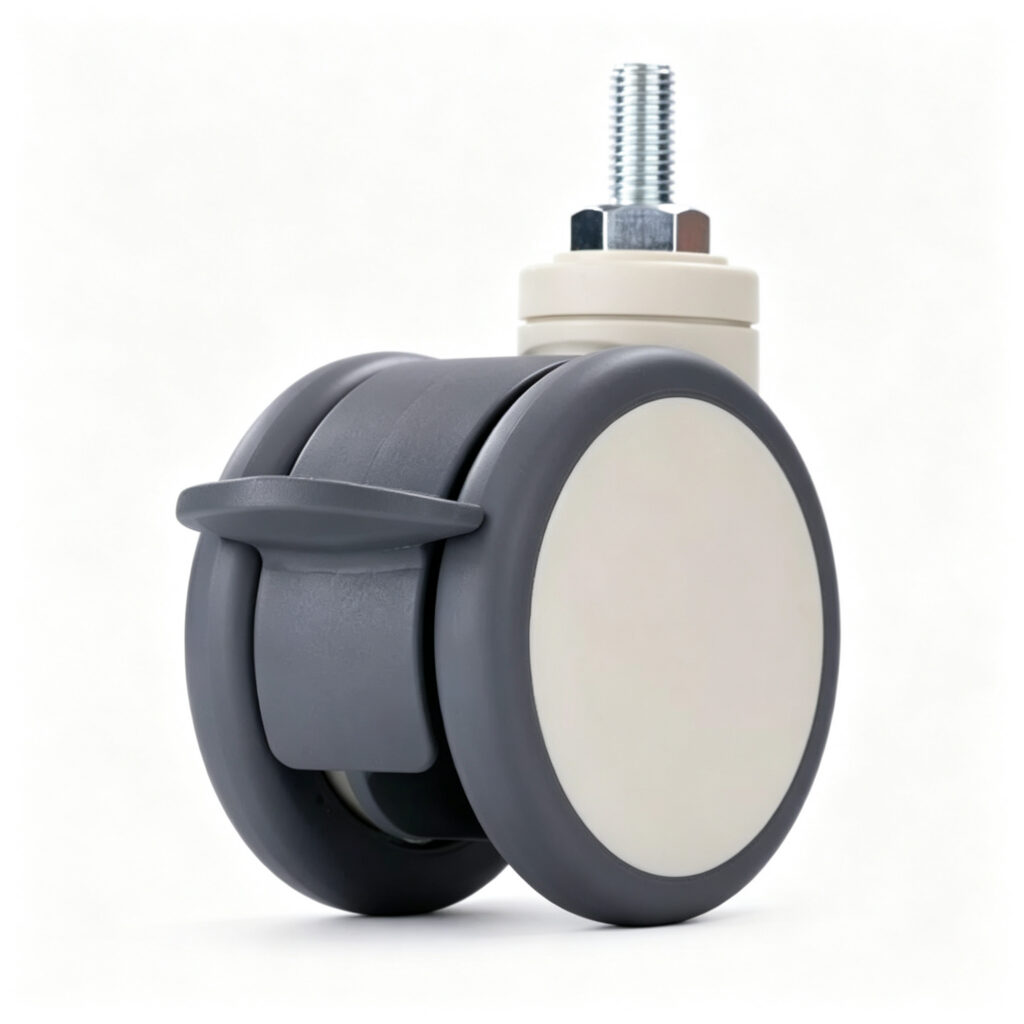
Threaded stem casters use a threaded metal stem that screws into a threaded mounting hole or compatible socket.
This mounting method provides a compact connection and can allow the caster to be installed or removed without using a large mounting plate.
Advantages of Threaded Stem Casters
- Compact design
- Simple installation
- Easy replacement
- Useful where mounting space is limited
- Can provide adjustable installation height in some designs
Common Applications
- Medical carts
- Equipment stands
- Healthcare furniture
- Light and medium-duty medical equipment
Thread size and pitch are critical. For example, a caster with the correct stem diameter may still be incompatible if the thread pitch does not match the equipment.
Plate vs Stem vs Threaded Medical Casters
| Feature | Plate Mount | Stem Mount | Threaded Stem |
|---|---|---|---|
| Mounting Style | Flat plate with holes | Vertical stem | Threaded vertical stem |
| Mounting Space | Requires more surface area | Compact | Very compact |
| Typical Applications | Hospital beds, stretchers | Medical carts, furniture | Carts, stands, equipment |
| Load Potential | Medium to heavy | Light to medium/heavy depending on design | Light to medium/heavy depending on design |
| Installation | Bolted | Inserted into socket | Screwed into threaded interface |
| Key Measurement | Hole pattern | Stem dimensions | Thread diameter and pitch |
How to Choose the Right Medical Caster Mounting Type
The easiest way to select a replacement caster is to start with the equipment’s existing mounting interface rather than choosing the wheel first.
Step 1: Identify the Existing Mount
Look at how the existing caster attaches to the equipment.
- If it uses a flat plate with bolts, choose a plate mount.
- If it uses a vertical socket, choose the appropriate stem mount.
- If the caster screws directly into the equipment, check for a threaded stem.
Step 2: Measure the Mounting Interface
Measure the mounting dimensions carefully before purchasing a replacement.
For plate mounts, measure the plate dimensions and bolt-hole pattern.
For stem mounts, measure stem diameter, stem length, socket diameter, and retention requirements.
For threaded stems, measure both thread diameter and thread pitch.
Step 3: Check the Overall Caster Height
Overall caster height is the distance from the mounting interface to the floor. Changing this dimension can change the height and operating geometry of the equipment.
This is especially important for hospital beds, stretchers, and equipment with height-adjustment mechanisms.
Step 4: Verify Load Capacity
The mounting interface must be capable of safely supporting the intended load.
Do not select a caster based only on wheel capacity. The complete assembly—including the mounting connection, fork, bearings, wheel, and equipment frame—must be suitable for the application.
Step 5: Check Brake Compatibility
Medical equipment may require individual brakes, total locking casters, directional locks, or central locking systems.
If the original equipment uses a central locking mechanism, the replacement caster must be compatible with that system.
Why Mounting Compatibility Matters for Hospital Beds
Hospital beds require particularly careful caster selection because they combine high loads, frequent movement, braking requirements, and patient safety considerations.
A replacement caster should match:
- Wheel diameter
- Overall height
- Mounting interface
- Load capacity
- Wheel material
- Brake system
- Swivel configuration
For hospital beds using a central locking mechanism, the caster mounting and locking interface should be verified before installation.
Can You Replace a Plate Mount Caster With a Stem Caster?
Usually, a direct replacement requires the new caster to match the original mounting interface. A plate mount caster cannot simply be replaced with a stem caster unless the equipment frame is modified or an appropriate adapter is designed and verified.
For safety-critical medical equipment, modifications to the mounting structure should only be performed after confirming the structural and functional requirements. >
Can You Replace a Threaded Stem Caster With Another Thread Size?
No. The replacement thread must match the equipment’s threaded mounting interface. Thread diameter alone is not sufficient; the thread pitch and effective engagement also need to be compatible.
If the thread does not match, do not force the caster into the mounting hole. Incorrect installation can damage the equipment and compromise caster security.
Medical Caster Mounting Selection Checklist
- Confirm the original mounting type
- Measure the mounting dimensions
- Check plate hole spacing if applicable
- Measure stem diameter and length if applicable
- Verify thread diameter and pitch for threaded stems
- Check overall caster height
- Confirm wheel diameter and width
- Verify load capacity
- Check brake and locking requirements
- Confirm compatibility with the equipment
Frequently Asked Questions
What are the main types of medical caster mounts?
The main types include plate mounts, stem mounts, and threaded stem mounts. Other specialized mounting configurations are also available for specific medical equipment.
Are plate mount casters stronger than stem mount casters?
Not automatically. Strength depends on the complete caster design, mounting hardware, equipment frame, and rated load. Plate mounts can provide a large mounting footprint, while properly engineered stem mounts can also support substantial loads.
How do I measure a medical caster for replacement?
Measure the wheel diameter and width, overall caster height, mounting interface, and—depending on the design—plate hole pattern, stem dimensions, or thread diameter and pitch.
What type of caster mount is best for hospital beds?
There is no universal mounting type for every hospital bed. The correct caster must match the bed manufacturer’s mounting interface, locking mechanism, dimensions, and load requirements.
Can medical casters be customized?
Yes. Medical caster manufacturers can offer different wheel materials, diameters, mounting configurations, brakes, bearings, and other specifications depending on the application.
Conclusion
Choosing the correct medical caster mounting type is essential for safe and reliable equipment mobility. Plate mounts provide a broad bolted connection, while stem and threaded stem designs offer compact mounting solutions for equipment with compatible sockets or threaded interfaces.
Before ordering replacement medical casters, always verify the mounting dimensions, overall height, load capacity, wheel specifications, and locking requirements.
For hospital beds and other healthcare equipment, selecting a caster based on the complete mounting and operating requirements—not just wheel size—helps ensure proper fit, reliable performance, and safe operation.
Looking for replacement medical casters?
Explore our Medical Casters for hospital beds, medical carts, and healthcare equipment.
Related Articles
- Best Silent Medical Casters for Healthcare Equipment
- How Often Should Medical Casters Be Replaced?
- How to Replace Hospital Bed Casters
- How to Choose Medical Casters
- TPU vs Rubber Medical Casters
- Central Locking Casters vs Total Lock Casters
- Twin Wheel vs Single Wheel Medical Casters
- How Much Weight Can Medical Casters Hold?
- Medical Casters vs Industrial Casters
- Medical Caster Maintenance Guide
- Common Reasons Hospital Bed Casters Fail
- Medical Casters Spotlight
- Are Twin-Wheel Casters Worth It?
- What Caster Wheels Do Hospitals Use?
- Hospital Bed Caster Replacement Guide
- Why TPU Medical Casters Reduce Noise in Hospitals
- Best Medical Caster Wheels for Hospital Beds

 English
  Japanese