
Can I Replace Hospital Bed Casters Myself?
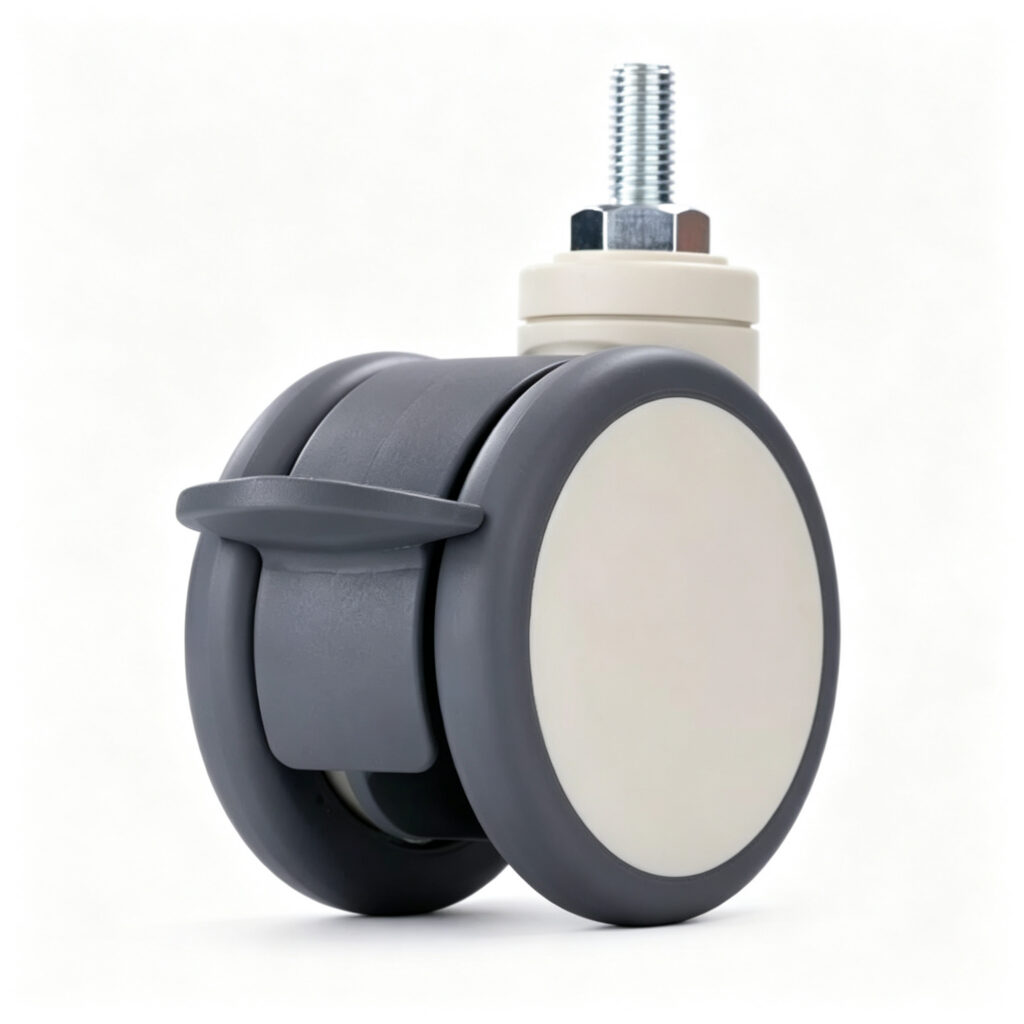
Yes, in many cases, you can replace hospital bed casters yourself if you have the correct replacement caster, the right mounting hardware, and basic mechanical skills. However, hospital beds are safety-critical equipment, so the replacement process should be handled carefully.
The most important step is not removing the old caster—it is making sure the replacement caster is compatible with the bed and can safely support the required load.
Can You Replace Hospital Bed Casters Yourself?
For many hospital beds, caster replacement is a relatively straightforward mechanical job. A damaged caster can often be removed and replaced without replacing the entire bed frame.
However, the replacement caster must match the bed’s mounting system, dimensions, load requirements, and locking mechanism.
Before starting, check:
- Caster wheel diameter
- Wheel width
- Mounting stem or mounting plate
- Stem diameter and length
- Mounting hole spacing, if applicable
- Overall caster height
- Load capacity
- Brake or locking mechanism
- Wheel material
When Should Hospital Bed Casters Be Replaced?
Hospital bed casters should be inspected regularly and replaced when they show signs of damage or unsafe operation.
Common warning signs include:
- Cracked or damaged wheels
- Excessive wobbling
- Grinding or unusual noise
- Difficulty pushing or steering the bed
- Damaged bearings
- A brake that does not lock properly
- Loose mounting hardware
- Uneven or excessive tread wear
- Corrosion or structural damage
If a caster no longer rolls, swivels, or locks correctly, replacing it is generally safer than continuing to use a damaged wheel.
How Do I Choose the Correct Replacement Hospital Bed Caster?
Choosing a replacement caster based only on wheel diameter can lead to compatibility problems. Two 5-inch casters, for example, may have completely different mounting systems or load ratings.
1. Measure the Wheel Diameter
Measure the outside diameter of the existing wheel. Common medical caster sizes include 4-inch, 5-inch, and 6-inch wheels.
Remember that changing wheel diameter can also affect the overall height of the bed and its clearance.
2. Identify the Mounting Type
Hospital bed casters may use different mounting configurations, including stem-mounted and plate-mounted designs. Some medical beds also use specialized mounting systems.
The replacement caster must use the correct mounting interface for the bed.
3. Check the Load Capacity
Do not choose a caster based only on the weight of the patient. The total load may include the bed frame, mattress, accessories, equipment, and patient.
For a four-caster bed, the theoretical load per caster can be estimated by dividing the total load by four. However, real-world loading is not always evenly distributed, so an appropriate safety margin is important.
4. Check the Locking System
Medical beds may use individual wheel brakes or central locking systems. If the original bed uses a specific locking mechanism, the replacement caster must be compatible with that system.
5. Check the Wheel Material
Wheel material affects noise, floor protection, rolling resistance, and durability.
Polyurethane and other resilient wheel materials are commonly considered for applications where smooth and relatively quiet movement is important.
How to Replace Hospital Bed Casters
The exact procedure depends on the bed design and caster mounting system. Always follow the bed manufacturer’s instructions when available.
Step 1: Prepare the Bed
Move the bed to a safe, level area. Remove unnecessary equipment and make sure the bed cannot roll unexpectedly.
Step 2: Inspect the Existing Caster
Before removing the caster, identify how it is mounted. Take measurements and, if necessary, photograph the mounting configuration so you can compare it with the replacement caster.
Step 3: Remove the Old Caster
Use the appropriate tools to remove the existing caster and mounting hardware. Do not force components that appear to be part of the bed’s structural or locking mechanism.
Step 4: Inspect the Mounting Point
Check the mounting area for cracks, deformation, corrosion, or damaged hardware. Installing a new caster onto a damaged mounting point may not solve the underlying problem.
Step 5: Install the Replacement Caster
Install the replacement caster according to the manufacturer’s instructions. Make sure the caster is fully seated and that all fasteners are properly secured.
Step 6: Test the Caster
Before returning the bed to normal use, test the caster’s rolling, swiveling, and locking functions.
Check that:
- The wheel rolls smoothly
- The caster swivels correctly
- The mounting connection is secure
- The brake engages and releases properly
- The bed remains stable when the brake is activated
Should You Replace One Hospital Bed Caster or All Four?
It depends on the condition of the remaining casters.
If one caster is damaged but the other casters are relatively new and in good condition, replacing a single caster may be possible if an identical or fully compatible replacement is available.
However, if several casters show significant wear, replacing the complete set can help maintain consistent rolling performance and braking behavior.
Can I Use Any Caster on a Hospital Bed?
No. A general-purpose industrial caster is not automatically suitable for a hospital bed.
Medical equipment requires careful consideration of load capacity, mounting compatibility, wheel performance, braking, cleanability, and floor protection.
A caster that physically fits may still be unsuitable if its load rating, mounting design, or locking system does not match the bed.
When Should You Ask a Professional for Help?
DIY replacement may be reasonable for a straightforward caster assembly, but professional assistance is recommended when:
- The mounting system is unfamiliar
- The bed has an integrated central locking system
- The caster is part of a specialized medical-bed mechanism
- The mounting point is damaged
- The correct replacement caster cannot be identified
- The bed is used in a professional healthcare environment and maintenance procedures require qualified personnel
If you are unsure whether a replacement caster is compatible, it is better to confirm the specifications before installation.
Frequently Asked Questions
Can I replace hospital bed casters myself?
Yes, many hospital bed casters can be replaced by someone with basic mechanical skills, provided the replacement caster is fully compatible with the bed’s mounting system and load requirements.
How do I know what hospital bed caster I need?
Check the wheel diameter, wheel width, mounting type, stem or plate dimensions, overall height, load capacity, and locking mechanism. Comparing the old caster with the replacement caster is also helpful.
Can I replace just one hospital bed caster?
Yes, if the replacement caster is compatible and the remaining casters are still in good condition. If multiple casters are worn, replacing the complete set may provide more consistent performance.
Are hospital bed casters universal?
No. Hospital beds can use different caster sizes, mounting systems, locking mechanisms, and dimensions. Always verify compatibility before purchasing replacement casters.
What is the most important specification when replacing a hospital bed caster?
There is no single specification that determines compatibility. The mounting system, wheel dimensions, load capacity, caster height, and locking mechanism should all be checked.
Final Thoughts
Can I replace hospital bed casters myself? In many cases, yes—but selecting the correct replacement caster is more important than the replacement procedure itself.
Before purchasing, compare the original caster’s dimensions, mounting configuration, load capacity, wheel material, and locking system. If the bed uses a specialized or central locking mechanism, make sure the replacement caster is specifically designed to work with that system.
For replacement medical casters, OmniWheelPro offers medical caster solutions designed for hospital beds and other healthcare equipment. If you are unsure which caster fits your application, compare your existing caster dimensions and mounting type before ordering.
Related Articles
- Medical Caster Mounting Types: Plate vs Stem vs Threaded
- Best Silent Medical Casters for Healthcare Equipment
- How Often Should Medical Casters Be Replaced?
- How to Replace Hospital Bed Casters
- How to Choose Medical Casters
- TPU vs Rubber Medical Casters
- Central Locking Casters vs Total Lock Casters
- Twin Wheel vs Single Wheel Medical Casters
- How Much Weight Can Medical Casters Hold?
- Medical Casters vs Industrial Casters
- Medical Caster Maintenance Guide
- Common Reasons Hospital Bed Casters Fail
- Medical Casters Spotlight
- Are Twin-Wheel Casters Worth It?
- What Caster Wheels Do Hospitals Use?
- Hospital Bed Caster Replacement Guide
- Why TPU Medical Casters Reduce Noise in Hospitals
- Best Medical Caster Wheels for Hospital Beds

 English
  Japanese