
How Do I Identify My Hospital Bed Caster?
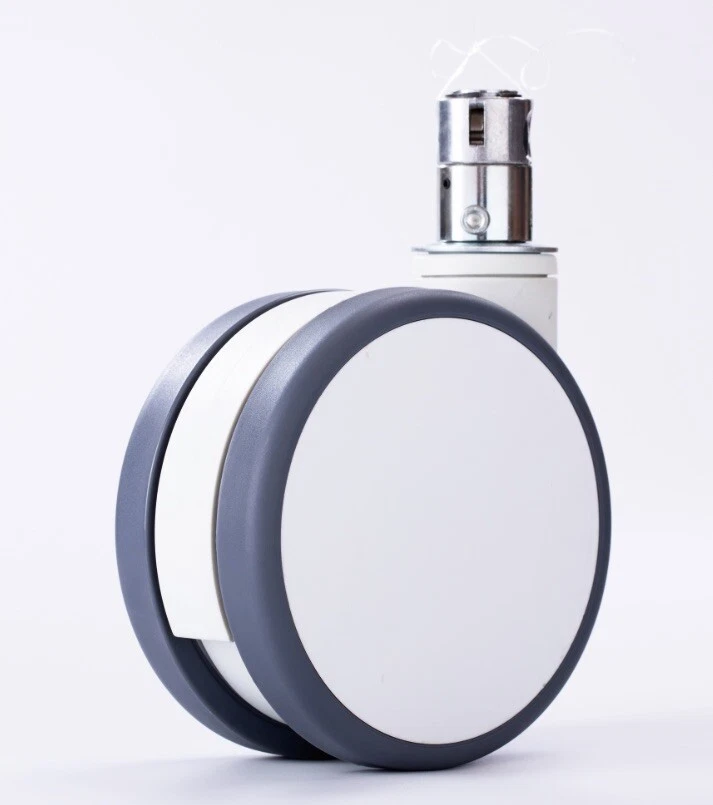
Replacing a hospital bed caster can be difficult if you do not know the exact caster type or specifications. Hospital beds can use different wheel sizes, mounting systems, brake mechanisms, and caster designs.
Before ordering a replacement, it is important to identify the existing caster correctly. A few simple checks and measurements can help you find a compatible hospital bed caster and avoid ordering the wrong part.
Why Is It Important to Identify the Correct Hospital Bed Caster?
Not all medical casters are interchangeable. Two hospital bed casters may look similar but have different mounting dimensions, wheel diameters, brake systems, or stem configurations.
Using the wrong caster can affect the bed’s height, stability, mobility, and braking performance. For this reason, you should identify the original caster before purchasing a replacement.
1. Check the Wheel Diameter
The first specification to check is the wheel diameter.
Common hospital bed caster sizes include approximately 4 inches, 5 inches, and 6 inches, although other sizes are also available depending on the bed design.
Measure the wheel from one edge of the tread to the opposite edge through the center of the wheel.
For example, a wheel measuring approximately 125 mm in diameter is generally considered a 5-inch caster.
| Approximate Diameter | Common Size |
|---|---|
| 100 mm | 4 inch |
| 125 mm | 5 inch |
| 150 mm | 6 inch |
Do not rely only on the appearance of the wheel. Always measure the actual diameter when possible.
2. Identify the Caster Mounting Type
The mounting method is one of the most important parts of caster identification.
Hospital bed casters commonly use mounting systems such as:
- Stem mount
- Threaded stem
- Expanding stem
- Plate mount
- Special or proprietary mounting systems
Look at how the caster connects to the hospital bed frame. If the caster has a vertical stem that fits into the bed frame, it is likely a stem-mounted caster. If the caster is attached using a mounting plate and bolts, you need to measure the plate and bolt-hole pattern.
3. Check the Stem or Mounting Dimensions
If your hospital bed uses a stem-mounted caster, measure the stem carefully.
Important measurements may include:
- Stem diameter
- Stem length
- Thread size, if applicable
- Thread pitch
- Stem shape
- Overall mounting height
A caster with the correct wheel diameter may still be incompatible if the stem does not fit the bed frame.
4. Check the Brake System
Hospital bed casters can use different braking systems. The brake mechanism is especially important because medical beds need reliable positioning and movement control.
Common configurations include:
- Total locking casters
- Directional locking casters
- Central locking casters
- Non-locking casters
Look at the existing pedal or brake mechanism and determine how it operates.
If the bed uses a central locking system, make sure the replacement caster is designed to work with the same locking mechanism. A standard locking caster may not be a suitable replacement for a centrally controlled hospital bed caster.
5. Check the Number of Wheels
Some medical casters use a single wheel, while others use a twin-wheel design.
A twin-wheel caster can provide additional stability and load distribution. If your original hospital bed uses a twin-wheel caster, check the replacement carefully to ensure that the overall dimensions and mounting system are compatible.
6. Look for Markings or Model Numbers
Before removing the caster, inspect it for identifying information.
Manufacturers may place model numbers, part numbers, logos, or other markings on the caster housing, mounting stem, brake pedal, or wheel assembly.
Take a clear photo of these markings. If you cannot identify the caster yourself, the information can help a caster supplier determine the correct replacement.
7. Measure the Overall Caster Height
Wheel diameter is not the only dimension that matters.
The overall height of the caster can affect the height and stability of the hospital bed. Measure from the mounting point to the floor when the caster is installed, or measure the complete caster assembly after removal.
Replacing a caster with a significantly different overall height may change the bed’s working height.
8. Check the Wheel Material
The wheel material can also help identify the correct replacement.
Medical casters may use materials such as polyurethane, rubber, thermoplastic rubber, or other engineered wheel compounds.
Consider the environment in which the bed is used. Quiet operation, floor protection, rolling resistance, and durability can all be affected by wheel material.
What Information Should I Collect Before Ordering?
Before contacting a medical caster supplier, collect as much information as possible.
- Wheel diameter
- Wheel width
- Overall caster height
- Wheel material
- Single-wheel or twin-wheel design
- Mounting type
- Stem diameter and length
- Thread size and pitch, if applicable
- Mounting plate dimensions
- Bolt-hole spacing
- Brake type
- Part number or model number
- Photos of the original caster
Can I Identify a Hospital Bed Caster From a Photo?
In many cases, a photo can provide useful information, especially when the caster has a distinctive housing, brake pedal, stem, or mounting plate.
However, a photo alone may not be enough to confirm compatibility. Two casters can look almost identical while having different stem dimensions or mounting specifications.
For the best result, provide photos together with the key measurements.
Final Checklist
Before ordering a replacement hospital bed caster, confirm these specifications:
- Wheel diameter
- Wheel width
- Mounting type
- Stem or plate dimensions
- Brake configuration
- Overall caster height
- Wheel material
- Load capacity
- Manufacturer or part number
Correct identification is the first step toward finding a compatible replacement. If you are unsure about any dimension, measure the original caster carefully and compare the complete mounting configuration rather than choosing a caster based only on wheel size.
Frequently Asked Questions
How do I know what size hospital bed caster I have?
Measure the wheel diameter from edge to edge through the center. Then check the wheel width, overall caster height, and mounting dimensions.
Are hospital bed casters universal?
No. Hospital bed casters are not universally interchangeable. Mounting dimensions, brake systems, wheel sizes, and stem configurations can vary between beds.
Can I replace a hospital bed caster with a different brand?
In some cases, yes, provided the replacement caster has compatible mounting dimensions, load capacity, brake functionality, and overall dimensions.
What is the most important measurement?
The mounting configuration is particularly important because a caster with the correct wheel diameter may still not fit the hospital bed frame.
Related Articles
- Can I Use Universal Casters on a Hospital Bed?
- How Do I Find the Correct Replacement Caster for a Hospital Bed?
- Can I Replace Just One Medical Caster?
- Can I Replace Hospital Bed Casters Myself?
- Medical Caster Mounting Types: Plate vs Stem vs Threaded
- Best Silent Medical Casters for Healthcare Equipment
- How Often Should Medical Casters Be Replaced?
- How to Replace Hospital Bed Casters
- How to Choose Medical Casters
- Central Locking Casters vs Total Lock Casters
- How Much Weight Can Medical Casters Hold?
- Medical Caster Maintenance Guide
- Medical Casters Spotlight
- Are Twin-Wheel Casters Worth It?
- What Caster Wheels Do Hospitals Use?
- Hospital Bed Caster Replacement Guide
- Best Medical Caster Wheels for Hospital Beds

 English
  Japanese