
Can I Replace Just One Medical Caster?
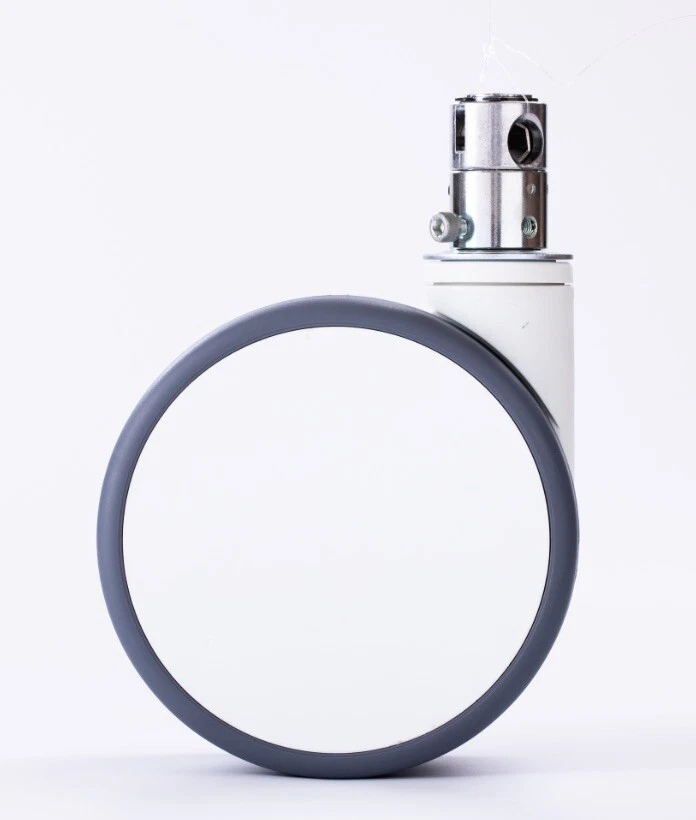
Yes, you can often replace just one medical caster if the other casters are still in good condition and the replacement caster is fully compatible with the medical equipment.
You do not automatically need to replace every caster when only one wheel is damaged. However, medical casters are part of the equipment’s mobility and stability system, so the replacement should match the original caster in the specifications that matter.
In this guide, we’ll explain when replacing one medical caster makes sense, what you should check before buying a replacement, and when replacing the complete set is a better choice.
When Can You Replace Just One Medical Caster?
A single caster replacement can be appropriate when one caster has failed while the other casters remain in good working condition.
For example, replacing only one caster may make sense when:
- One wheel is cracked or damaged
- One caster has a failed bearing
- One caster no longer swivels properly
- One brake has stopped working
- One caster has excessive tread wear
- One caster has been damaged by impact
- The other casters have relatively low wear
- An identical or compatible replacement is available
In these situations, replacing the damaged caster can be more practical than replacing a complete set.
Is It Safe to Replace Only One Medical Caster?
It can be, provided that the replacement caster is appropriate for the equipment and the remaining casters are still safe to use.
The new caster should have compatible:
- Wheel diameter
- Wheel width
- Overall caster height
- Mounting system
- Load capacity
- Wheel material
- Bearing configuration
- Brake or locking mechanism
A caster that physically fits the mounting point is not necessarily a suitable replacement. Differences in height, wheel diameter, or locking design can affect how the equipment moves and operates.
Why Does Caster Matching Matter?
Medical equipment typically relies on multiple casters working together. If one replacement caster is significantly different from the other casters, the equipment may not move as intended.
An incorrectly matched caster can potentially cause:
- Uneven equipment height
- Different rolling resistance
- Uneven wear
- Reduced maneuverability
- Different braking performance
- Increased vibration or noise
For this reason, the safest approach is usually to find an identical replacement or a caster specifically designed as a compatible replacement.
What Should You Check Before Replacing One Medical Caster?
1. Wheel Diameter
Measure the outside diameter of the existing wheel. Even a small difference in wheel diameter can change the overall caster height and rolling characteristics.
Common medical caster sizes include 4-inch, 5-inch, and 6-inch wheels, but the correct size depends on the equipment.
2. Wheel Width
Measure the width of the wheel and compare it with the replacement caster.
A different wheel width can affect clearance, rolling resistance, and the way the caster interacts with the floor.
3. Mounting Type
Check how the caster is attached to the equipment.
Medical equipment may use different mounting configurations, including:
- Threaded stems
- Expanding stems
- Grip-ring stems
- Mounting plates
- Specialized medical-bed mounting systems
The replacement caster must match the mounting interface.
4. Overall Caster Height
Overall caster height is especially important because it determines the relationship between the equipment frame and the floor.
Installing a caster that is significantly taller or shorter than the original can affect equipment height and clearance.
5. Load Capacity
Make sure the replacement caster can support the required load.
For hospital beds, the total load can include the patient, bed frame, mattress, accessories, and other equipment. The caster’s load rating should be appropriate for the complete application rather than based only on the patient’s weight.
6. Brake or Locking Mechanism
If the original caster has a brake, the replacement should provide the required braking function.
For equipment using a specialized or central locking system, compatibility with the complete locking mechanism is particularly important.
Should I Replace One Caster or All Four?
The answer depends mainly on the condition of the remaining casters.
| Condition | Recommended Approach |
|---|---|
| One caster is damaged and the others are in good condition | Consider replacing one caster |
| One caster has a failed bearing | Single replacement may be appropriate |
| All casters have significant wear | Consider replacing the complete set |
| Several brakes are failing | Consider replacing multiple or all casters |
| Replacement caster is no longer available | Consider a compatible complete set |
| Central locking system is involved | Verify system compatibility before replacement |
When Should You Replace All Medical Casters?
Replacing the entire set may be more practical when the existing casters have similar age and wear.
Consider a complete replacement if:
- Multiple casters are damaged
- Several wheels have worn tread
- Multiple bearings are noisy or failing
- The casters have excessive wobble
- Several brakes are unreliable
- The equipment is difficult to move
- The existing caster model is discontinued
- The remaining casters have reached the end of their service life
Installing a complete set can provide more consistent rolling, swiveling, wheel wear, and braking performance.
Can I Replace One Caster With a Different Brand?
Possibly, but brand name is not the most important factor.
A replacement caster from a different manufacturer may be suitable if it matches the required specifications and is designed for the application.
Before mixing caster brands, compare:
- Wheel diameter
- Wheel width
- Caster height
- Mounting dimensions
- Load rating
- Wheel material
- Swivel characteristics
- Brake or locking mechanism
If these specifications are substantially different, replacing one caster with a different model may not be a good idea.
What About Hospital Bed Casters?
Hospital beds require particular attention because their casters affect movement, steering, stability, and braking.
If only one hospital bed caster is damaged, it may be possible to replace just that caster. However, the replacement should be compatible with the bed’s original caster system.
Before ordering a replacement hospital bed caster, identify:
- Wheel size
- Mounting type
- Stem or plate dimensions
- Load capacity
- Brake type
- Central locking compatibility, if applicable
What About Central Locking Medical Casters?
Central locking systems require additional attention.
Unlike a simple individual brake, a central locking system may connect multiple casters through a mechanical linkage. The caster must therefore be compatible with the system, not simply compatible with the mounting hole.
Before replacing one central locking caster, verify that:
- The replacement caster is designed for the same locking system
- The mounting height is correct
- The locking linkage engages correctly
- The brake fully locks the wheel and swivel function as intended
- The replacement caster does not interfere with other components
If you cannot identify the central locking mechanism, consult the equipment manufacturer or a qualified service professional before installing a replacement.
How Do You Inspect the Other Medical Casters?
If you plan to replace only one caster, inspect all of the other casters first.
Look for:
- Cracked wheels
- Flat spots
- Uneven tread wear
- Wobbling
- Grinding or squeaking
- Loose mounting hardware
- Corrosion
- Damaged bearings
- Stiff swiveling
- Brake problems
If the remaining casters are heavily worn, replacing only one may provide limited benefit because the equipment will still rely on several aging casters.
Can You Replace Just the Wheel Instead of the Whole Caster?
Sometimes the wheel itself can be replaced, depending on the caster design.
However, if the swivel assembly, bearing, fork, brake, or mounting components are damaged, replacing only the wheel may not solve the problem.
For medical equipment, replacing the complete caster can be a more straightforward option when the caster assembly has multiple worn components.
How Do I Find the Correct Replacement Medical Caster?
Start by collecting as much information as possible about the existing caster.
Useful information includes:
- Manufacturer and model of the equipment
- Existing caster diameter
- Wheel width
- Mounting type
- Stem dimensions
- Mounting plate dimensions
- Overall caster height
- Load requirement
- Brake or locking type
Photos of the existing caster and mounting area can also help when identifying a replacement.
Advantages of Replacing Only One Medical Caster
When the remaining casters are in good condition, replacing only one can have several advantages:
- Lower replacement cost
- Less maintenance time
- No need to replace functional casters
- Useful when one caster is damaged accidentally
- Practical when matching replacement parts are available
Potential Disadvantages of Replacing Only One
There are also situations where a single replacement may not be ideal.
- The new caster may have different wear characteristics
- The remaining casters may already be near the end of their service life
- Matching the original caster may be difficult
- Different casters can have different rolling characteristics
- A central locking system may require specific compatibility
This is why inspecting the complete caster system before ordering a replacement is important.
Frequently Asked Questions
Can I replace just one medical caster?
Yes. You can often replace just one medical caster when it is damaged and the remaining casters are still in good condition. The replacement must be compatible with the equipment.
Do all four medical casters need to match?
They should be compatible with the equipment and each other. Ideally, replacement casters should match the original specifications for wheel size, height, mounting, load capacity, and locking function.
Can I replace one hospital bed wheel?
Yes, a single hospital bed caster can often be replaced if the replacement matches the bed’s mounting system and required specifications.
Can I use a different brand for one replacement caster?
Possibly. The important factors are compatibility, dimensions, load capacity, wheel characteristics, and braking or locking requirements rather than brand name alone.
Should I replace all casters if one is broken?
Not necessarily. If the other casters are in good condition, replacing only the damaged caster may be sufficient. If the remaining casters are significantly worn, replacing the complete set may be more practical.
How do I know if my other medical casters need replacement?
Inspect them for excessive wear, cracks, wobbling, bearing noise, difficult swiveling, corrosion, loose mounting components, and unreliable brakes.
Final Answer: Can You Replace Just One Medical Caster?
Yes, in many applications you can replace just one medical caster. The key is making sure that the new caster is fully compatible with the existing equipment and that the other casters are still in safe working condition.
If one caster is damaged while the others have minimal wear, a single replacement can be a practical and cost-effective solution. If several casters are worn, noisy, damaged, or have unreliable brakes, replacing the complete set may provide more consistent performance.
Before ordering a replacement, always compare the wheel diameter, wheel width, caster height, mounting system, load capacity, wheel material, and locking mechanism.
OmniWheelPro provides medical caster wheels and hospital bed casters for healthcare equipment applications. If you are unsure whether you need one replacement caster or a complete set, identifying the existing caster specifications is the best place to start.
Need help choosing a replacement medical caster? Check your existing caster dimensions and mounting type before ordering to ensure the replacement is suitable for your application.
Related Articles
- Can I Replace Hospital Bed Casters Myself?
- Medical Caster Mounting Types: Plate vs Stem vs Threaded
- Best Silent Medical Casters for Healthcare Equipment
- How Often Should Medical Casters Be Replaced?
- How to Replace Hospital Bed Casters
- How to Choose Medical Casters
- TPU vs Rubber Medical Casters
- Central Locking Casters vs Total Lock Casters
- Twin Wheel vs Single Wheel Medical Casters
- How Much Weight Can Medical Casters Hold?
- Medical Caster Maintenance Guide
- Common Reasons Hospital Bed Casters Fail
- Medical Casters Spotlight
- Are Twin-Wheel Casters Worth It?
- What Caster Wheels Do Hospitals Use?
- Hospital Bed Caster Replacement Guide
- Best Medical Caster Wheels for Hospital Beds

 English
  Japanese