
Best Silent Medical Casters for Healthcare Equipment
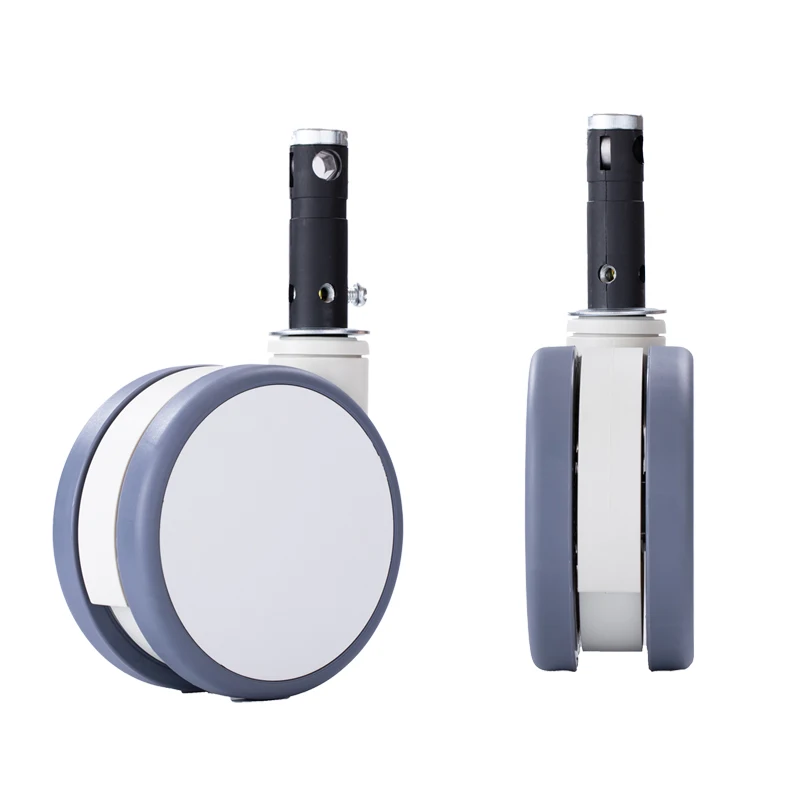
Noise may seem like a small issue when choosing medical casters, but in hospitals and healthcare facilities, caster noise can affect patient comfort, staff working conditions, and the overall healthcare environment.
Hospital beds, patient stretchers, medical carts, and mobile diagnostic equipment may be moved many times throughout the day. Choosing silent medical casters can help reduce rolling noise, vibration, and floor impact while maintaining smooth and reliable mobility.
This guide explains what makes a medical caster quiet and how to choose the best silent caster for hospital beds and other healthcare equipment.
What Are Silent Medical Casters?
Silent medical casters are caster wheels designed to minimize rolling noise and vibration during movement. They typically combine a quiet wheel material, precision bearings, and a caster structure designed for smooth operation.
Modern silent medical casters commonly use materials such as TPU or other resilient polyurethane-based compounds. These materials can provide a balance between quiet rolling, durability, floor protection, and load capacity.
Silent caster wheels are particularly useful in hospitals, clinics, nursing homes, rehabilitation centers, and other healthcare environments where equipment may need to be moved without creating unnecessary noise.
Why Quiet Casters Matter in Hospitals
Healthcare facilities operate around the clock. Hospital beds and medical equipment may be moved through patient rooms, corridors, treatment areas, and intensive care environments at any time of day.
Reducing caster noise can provide several practical benefits:
- Reduced rolling noise in patient areas
- Lower vibration during equipment movement
- Improved patient comfort
- Smoother movement for healthcare staff
- Better protection for hospital flooring
- More comfortable operation of mobile medical equipment
Caster design is only one factor in hospital noise, but selecting wheels with appropriate materials and bearings can help create quieter equipment movement.
What Makes a Medical Caster Quiet?
Several components affect the noise level of a medical caster. Choosing a quiet wheel material alone is not enough. The wheel, bearing, swivel mechanism, and floor surface all contribute to the final result.
1. Wheel Material
The wheel tread is one of the most important factors affecting rolling noise.
TPU medical casters are widely used when quiet operation, durability, and floor protection are important. Compared with hard plastic wheels, resilient polyurethane-based wheels can reduce impact and vibration during movement.
2. Bearing Quality
Bearings affect both rolling resistance and mechanical noise. High-quality bearings can provide smoother wheel rotation and reduce friction during movement.
For healthcare equipment that is frequently moved, sealed or appropriately protected bearings can also help reduce maintenance caused by dust, moisture, and cleaning environments.
3. Wheel Design
Wheel diameter, tread profile, wheel width, and overall caster construction can affect rolling performance.
Larger wheels generally roll more easily over small floor transitions and obstacles, while the appropriate wheel width helps distribute the load over the floor.
4. Swivel Mechanism
A caster can still make noise even when the wheel itself is quiet. Worn swivel bearings, loose components, or damaged mounting hardware can create clicking, rattling, or squeaking sounds.
For this reason, the complete caster assembly should be considered when evaluating silent medical casters.
TPU vs Rubber for Silent Medical Casters
Both TPU and rubber can be used for quiet medical caster applications, but they have different characteristics.
| Feature | TPU | Rubber |
|---|---|---|
| Noise Reduction | Excellent | Very Good |
| Wear Resistance | Excellent | Good |
| Floor Protection | Excellent | Very Good |
| Rolling Resistance | Low to Medium | Medium |
| Chemical Resistance | Generally Good | Depends on rubber compound |
| Service Life | Generally Long | Generally Shorter |
For many modern hospital applications, TPU is an attractive choice because it combines quiet rolling with good wear resistance and floor protection.
Best Silent Medical Caster Features to Look For
When comparing silent hospital bed wheels or medical equipment casters, look beyond the word “silent.” Check the complete technical specification.
1. Low-Noise Wheel Material
Look for a resilient wheel compound designed for quiet indoor operation. TPU is a strong option for many healthcare applications.
2. Adequate Load Capacity
The caster must support the complete operating load. For a hospital bed, this includes the bed itself, mattress, accessories, patient, and any additional equipment.
Never select a caster based only on the empty equipment weight.
3. Reliable Bearings
Good wheel and swivel bearings help maintain smooth movement and reduce mechanical noise. Bearings should also be suitable for the operating environment and maintenance requirements.
4. Non-Marking Wheels
Medical facilities commonly use vinyl, epoxy, tile, and other finished flooring. Non-marking wheel compounds can help reduce visible floor marks during frequent equipment movement.
5. Appropriate Locking System
Hospital beds and patient transport equipment require more than quiet movement. They also need reliable positioning and braking.
Depending on the equipment design, consider:
- Central locking casters
- Total locking casters
- Directional locking systems
- Individual wheel brakes
6. Easy Cleaning and Maintenance
Medical equipment is regularly cleaned and disinfected. Caster designs should be suitable for the facility’s cleaning procedures and operating environment.
Best Silent Medical Casters by Application
| Application | Recommended Features |
|---|---|
| Hospital Beds | TPU wheels, high load capacity, central locking |
| ICU Beds | Quiet wheels, high stability, reliable braking |
| Patient Stretchers | Quiet rolling, good maneuverability, strong brakes |
| Medical Carts | Low noise, smooth swivel, non-marking wheels |
| Diagnostic Equipment | Low vibration, smooth rolling, floor protection |
| Nursing Home Equipment | Quiet operation, durability, easy maintenance |
Silent Casters for Hospital Beds
Hospital beds are among the most demanding applications for medical casters. A bed may need to support a significant combined load while still being easy for staff to move.
For this application, a good caster should provide:
- High load capacity
- Quiet rolling performance
- Good directional stability
- Reliable braking
- Easy maneuverability
- Floor protection
For hospital beds equipped with a central locking system, the caster should also be compatible with the bed’s locking mechanism and mounting configuration.
For reference, EN 12531 specifies technical and testing requirements for certain hospital-bed swivel casters with wheel diameters of 100 mm or more and central locking devices. Always verify the applicable standard and the specific requirements of your equipment and market before selecting a caster.
Silent Twin Wheel Medical Casters
Twin wheel casters use two wheels within one caster assembly. They can provide improved stability and load distribution while maintaining good maneuverability.
This makes twin wheel designs particularly useful for:
- Hospital beds
- ICU equipment
- Patient transport equipment
- Heavy medical carts
- Healthcare equipment requiring additional stability
When combined with a quiet TPU tread and suitable bearings, twin wheel medical casters can provide a strong combination of stability, durability, and low-noise operation.
How to Choose the Best Silent Medical Caster
Use the following checklist before ordering replacement or OEM medical casters:
- Measure the wheel diameter.
- Check the total equipment load.
- Confirm the required mounting type.
- Check the wheel width.
- Identify the required bearing type.
- Determine whether a brake or central locking system is required.
- Confirm floor compatibility.
- Consider noise requirements.
- Check cleaning and chemical exposure.
- Verify the caster’s dimensions and installation interface.
When Should You Replace Silent Medical Casters?
Even high-quality medical casters eventually require replacement. Inspect the caster regularly for:
- Cracked or damaged wheels
- Flat spots
- Excessive wheel wear
- Squeaking or unusual noise
- Loose mounting hardware
- Difficulty swiveling
- Increased rolling resistance
- Brake failure
- Visible bearing damage
A caster that suddenly becomes noisy may not necessarily have a damaged wheel. The problem can also come from bearings, the swivel mechanism, mounting hardware, debris, or floor conditions.
Frequently Asked Questions
What are the quietest medical caster wheels?
Quiet medical casters typically use resilient wheel materials such as TPU or other polyurethane-based compounds, combined with suitable bearings and a properly designed caster assembly.
Are TPU medical casters quieter than hard plastic casters?
TPU wheels generally provide better vibration absorption and quieter rolling than hard plastic wheels, making them suitable for many hospital and healthcare applications.
Are silent casters suitable for hospital beds?
Yes. Silent medical casters can be used on hospital beds when their load capacity, mounting configuration, braking system, dimensions, and other specifications match the bed.
Are twin wheel casters quieter than single wheel casters?
Not necessarily. Noise depends on the wheel material, bearings, caster construction, floor surface, load, and maintenance. A twin wheel design primarily provides advantages in stability and load distribution rather than automatically reducing noise.
Do silent medical casters need brakes?
For hospital beds and many patient-care applications, a reliable locking or braking system is essential. The specific system should match the equipment design and intended use.
Conclusion
The best silent medical casters combine quiet wheel materials, smooth bearings, appropriate load capacity, reliable braking, and a durable caster structure.
Related Articles
- How Often Should Medical Casters Be Replaced?
- How to Replace Hospital Bed Casters
- How to Choose Medical Casters
- TPU vs Rubber Medical Casters
- Central Locking Casters vs Total Lock Casters
- Twin Wheel vs Single Wheel Medical Casters
- How Much Weight Can Medical Casters Hold?
- Medical Casters vs Industrial Casters
- Medical Caster Maintenance Guide
- Common Reasons Hospital Bed Casters Fail
- Medical Casters Spotlight
- Are Twin-Wheel Casters Worth It?
- What Caster Wheels Do Hospitals Use?
- Hospital Bed Caster Replacement Guide
- Why TPU Medical Casters Reduce Noise in Hospitals
- Best Medical Caster Wheels for Hospital Beds

 Japanese
  English