
Why Industrial Omni Wheels Are Increasingly Using TPU Instead of Traditional Rubber
As automation, robotics, AGV systems, and industrial mobility equipment continue to evolve, the materials used in omni wheels are becoming more important than ever.
In recent years, TPU (Thermoplastic Polyurethane) has rapidly replaced traditional rubber in many industrial omni wheel applications. From AGV robots and autonomous mobile platforms to warehouse automation and smart mobility systems, TPU omni wheels are now widely preferred for their durability, performance, and long service life.
At OmniWheelPro, we have seen growing demand for TPU omni wheels across robotics, logistics, medical equipment, and industrial automation industries worldwide.
What Is TPU?
TPU (Thermoplastic Polyurethane) is a high-performance elastomer material that combines the elasticity of rubber with the toughness and wear resistance of engineering plastics.
Compared with conventional rubber, TPU offers:
- Higher abrasion resistance
- Better load-bearing performance
- Lower rolling resistance
- Improved chemical resistance
- Longer service life
- Better dimensional stability
These advantages make TPU especially suitable for industrial omni wheels operating in demanding environments.
Why TPU Is Replacing Traditional Rubber in Industrial Omni Wheels
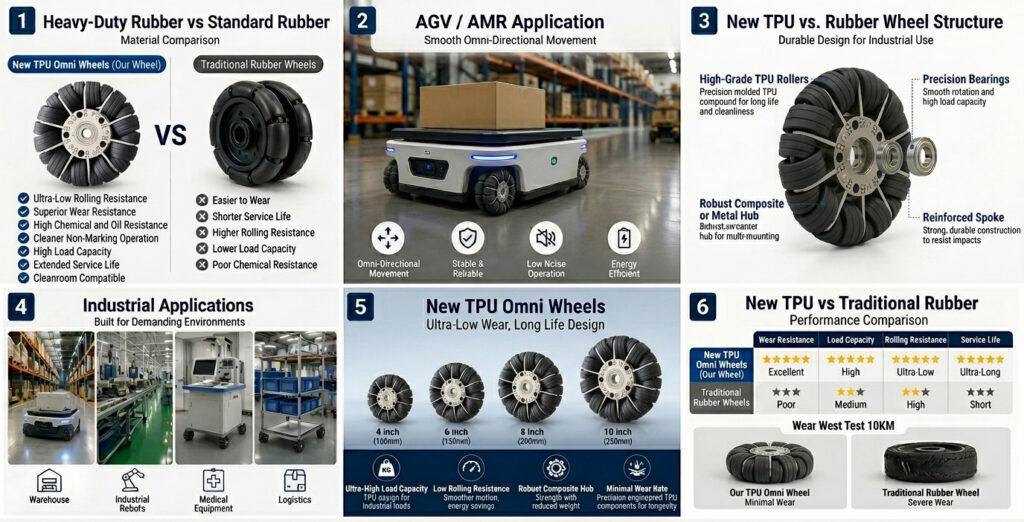
- Superior Wear Resistance
Industrial omni wheels are often used in:
- AGV robots
- AMR systems
- Warehouse automation
- Conveyor transfer platforms
- Heavy-duty mobile equipment
These applications involve continuous movement, high-frequency turning, and lateral sliding motions.
Traditional rubber wheels tend to wear quickly under these conditions, especially during multidirectional movement. TPU, however, provides excellent abrasion resistance and significantly extends wheel lifespan.
For industrial automation systems running 24/7, longer wheel life directly reduces maintenance costs and downtime.
- Higher Load Capacity
TPU has much stronger structural stability than ordinary rubber.
This allows TPU omni wheels to support:
- Heavy AGV payloads
- Industrial robots
- Automated carts
- Medical equipment
- Mobile machinery
Under high loads, rubber wheels may deform over time, affecting movement precision and stability. TPU maintains its shape better, which improves operational accuracy.
This is particularly important for autonomous robots requiring precise navigation and positioning.
- Lower Rolling Resistance
One major advantage of TPU is its lower rolling resistance.
Compared with traditional rubber wheels, TPU omni wheels require less driving force to move. This leads to:
- Improved AGV battery efficiency
- Reduced motor load
- Lower energy consumption
- Smoother mobility
For autonomous mobile robots operating continuously, energy efficiency is critical.
Lower rolling resistance also helps reduce heat generation during long working cycles.
- Better Performance on Modern Industrial Floors
Many factories and warehouses now use:
- Epoxy floors
- PU-coated floors
- Smooth concrete
- Anti-static flooring
TPU performs exceptionally well on these surfaces because it offers:
- Smooth rolling
- Reduced vibration
- Lower noise
- Better floor protection
Traditional rubber wheels may leave marks, generate dust, or degrade faster on modern industrial flooring systems.
Non-marking TPU materials are now increasingly preferred in clean environments and automated facilities.
- Improved Chemical and Oil Resistance
Industrial environments often expose wheels to:
- Oils
- Grease
- Cleaning chemicals
- Moisture
- Dust
Traditional rubber can crack, harden, or deteriorate when exposed to chemicals over time.
TPU offers much better resistance to industrial contaminants, making it suitable for:
- Factory automation
- Medical equipment
- Food processing systems
- Logistics centers
- Semiconductor facilities
- More Stable Performance for Robotics Applications
Modern robotics systems require highly consistent wheel performance.
TPU provides:
- Stable traction
- Precise motion control
- Better multidirectional movement
- Reduced vibration during navigation
For omni wheels used in AGV and AMR robots, material consistency directly affects navigation accuracy and motion smoothness.
This is one reason why TPU has become the standard material for many high-end robotics wheel systems.
TPU vs Traditional Rubber Omni Wheels
| Feature | TPU Omni Wheels | Traditional Rubber Wheels |
| Wear Resistance | Excellent | Moderate |
| Load Capacity | High | Medium |
| Rolling Resistance | Low | Higher |
| Floor Protection | Excellent | Moderate |
| Noise Reduction | Good | Good |
| Chemical Resistance | Excellent | Limited |
| Service Life | Long | Shorter |
| Dimensional Stability | Excellent| | Moderate |
Why TPU Omni Wheels Are Ideal for AGV & AMR Robots
AI-driven automation systems increasingly rely on TPU omni wheels because they support:
- High-precision movement
- Smooth multidirectional mobility
- Long operational life
- Reduced maintenance
- Energy-efficient operation
As warehouse automation and autonomous robotics continue growing worldwide, TPU-based omni wheel systems are becoming the preferred industry solution.
OmniWheelPro TPU Industrial Omni Wheels
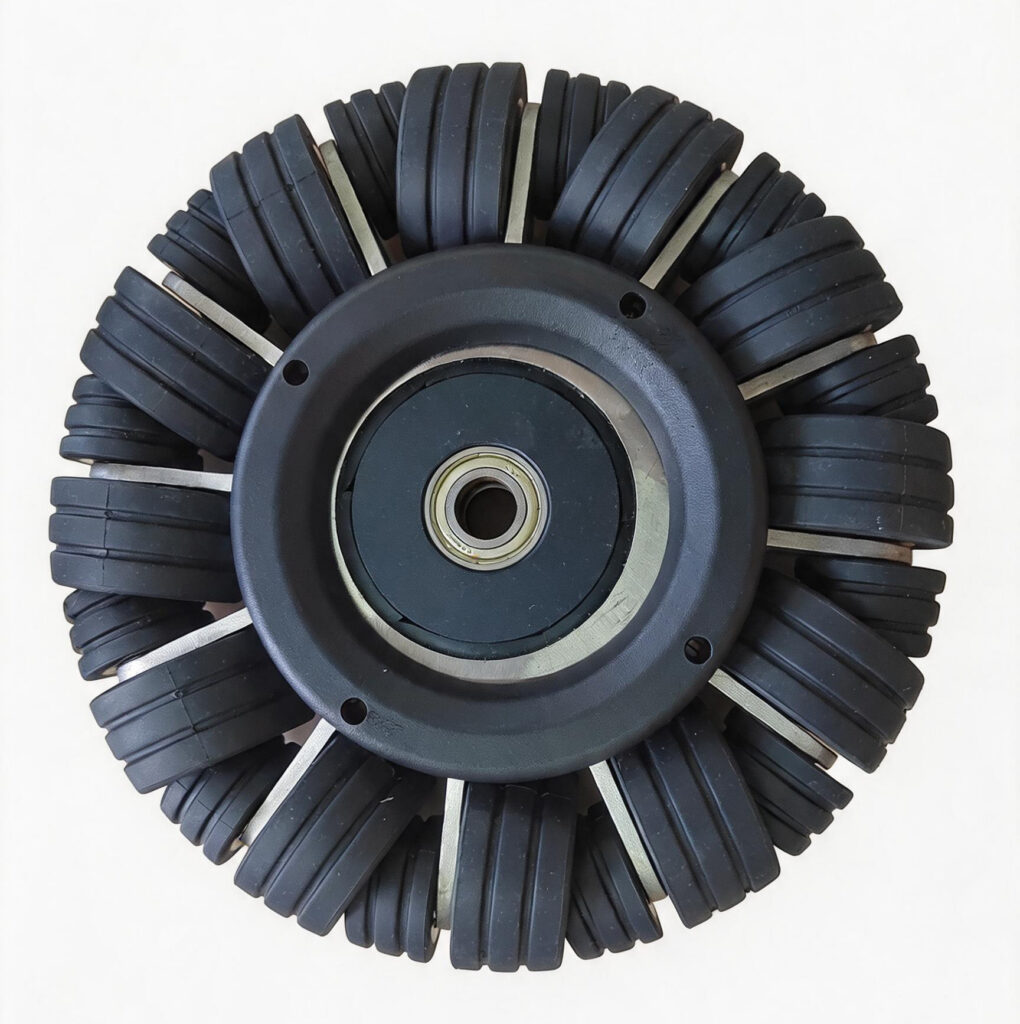
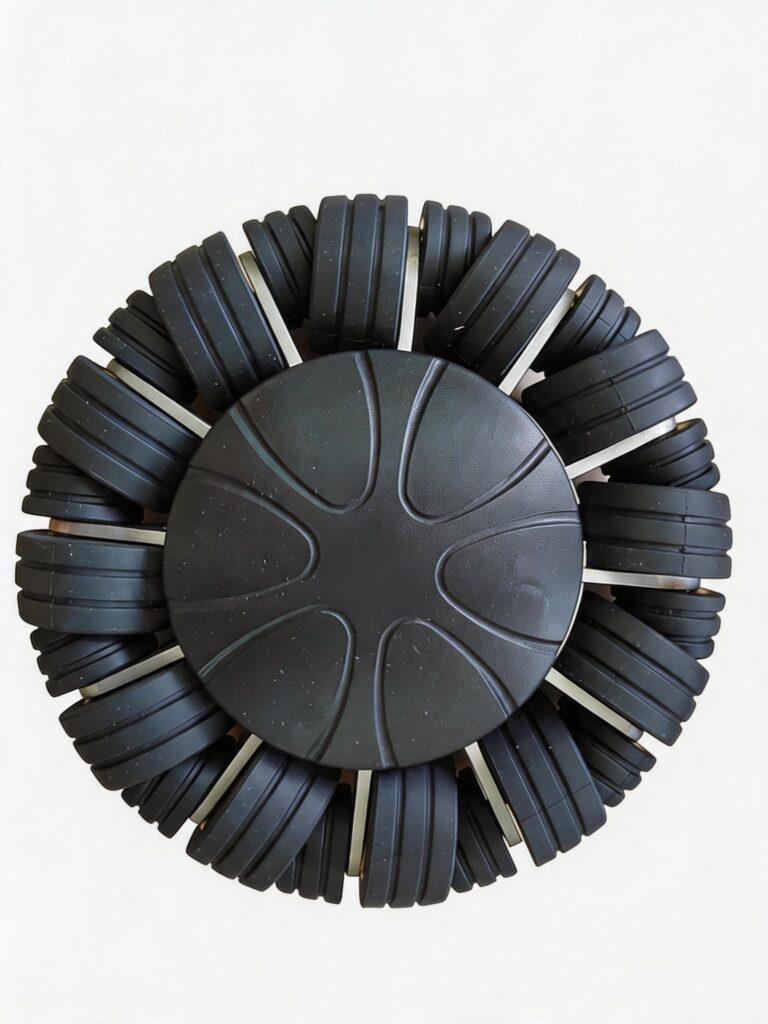
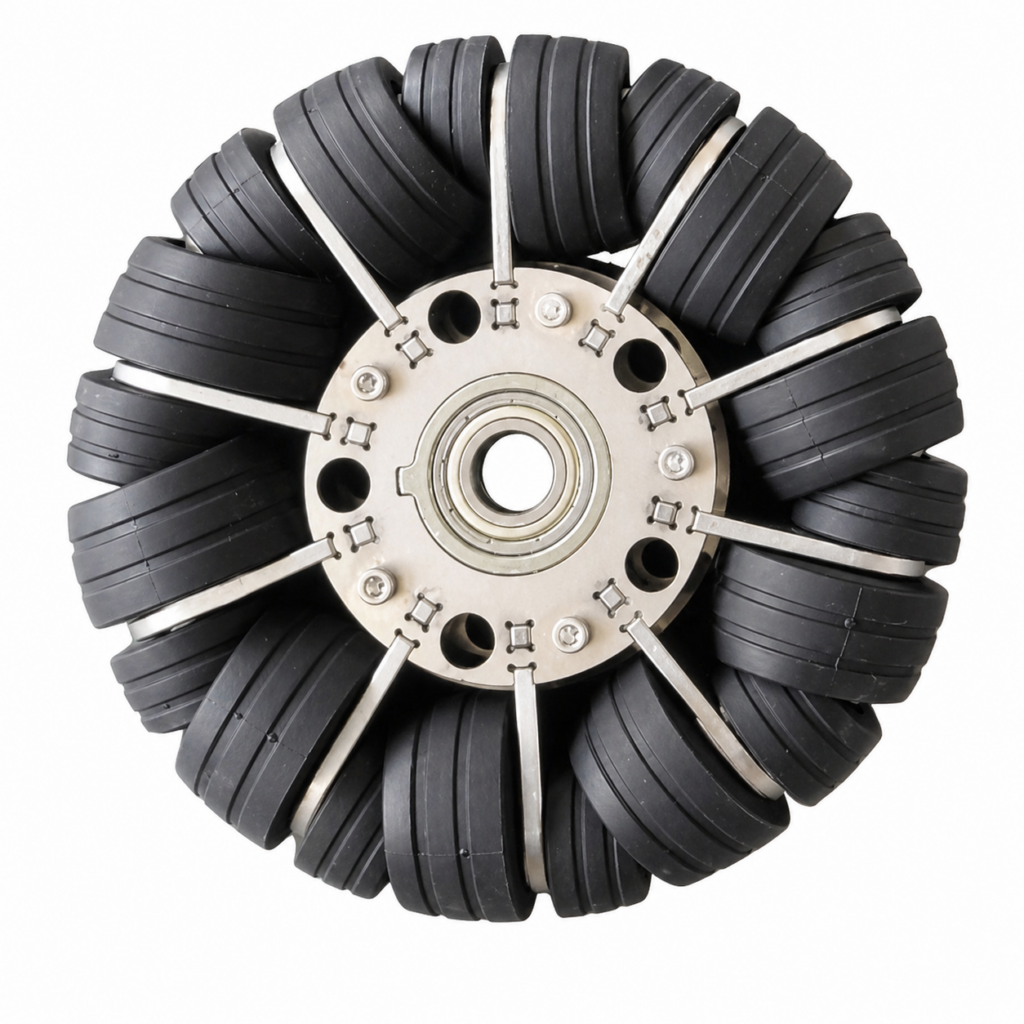
At OmniWheelPro, we manufacture industrial-grade TPU omni wheels designed for:
- AGV robots
- AMR platforms
- Industrial automation
- Robotics systems
- Heavy-duty mobility equipment
Our TPU omni wheels are engineered for:
- High durability
- Smooth multidirectional movement
- Long service life
- Low maintenance
- Industrial-grade reliability
We offer multiple sizes including:
Custom OEM and bulk orders are also available for robotics manufacturers and automation integrators worldwide.
Frequently Asked Questions
Are TPU omni wheels better than rubber wheels?
For industrial and robotics applications, TPU omni wheels generally outperform traditional rubber wheels in durability, load capacity, and wear resistance.
Do TPU omni wheels reduce maintenance?
Yes. TPU wheels typically last much longer and resist wear better, reducing replacement frequency and maintenance costs.
Are TPU omni wheels suitable for AGV robots?
Absolutely. TPU omni wheels are widely used in AGV and AMR systems because they provide smooth multidirectional movement and stable performance.
Do TPU wheels damage industrial floors?
Most industrial TPU wheels are non-marking and designed to protect modern factory flooring.
TPU is rapidly becoming the preferred material for industrial omni wheels because it offers significant advantages over traditional rubber in durability, efficiency, and motion performance.
As robotics, AGV systems, and industrial automation continue advancing, TPU omni wheels will play an increasingly important role in modern mobility solutions.
For high-performance industrial TPU omni wheels, visit OmniWheelPro to explore our full range of omni wheel products for robotics and automation applications.

 Japanese
  English