
Twin Wheel vs Single Wheel Medical Casters: Which Is Better?
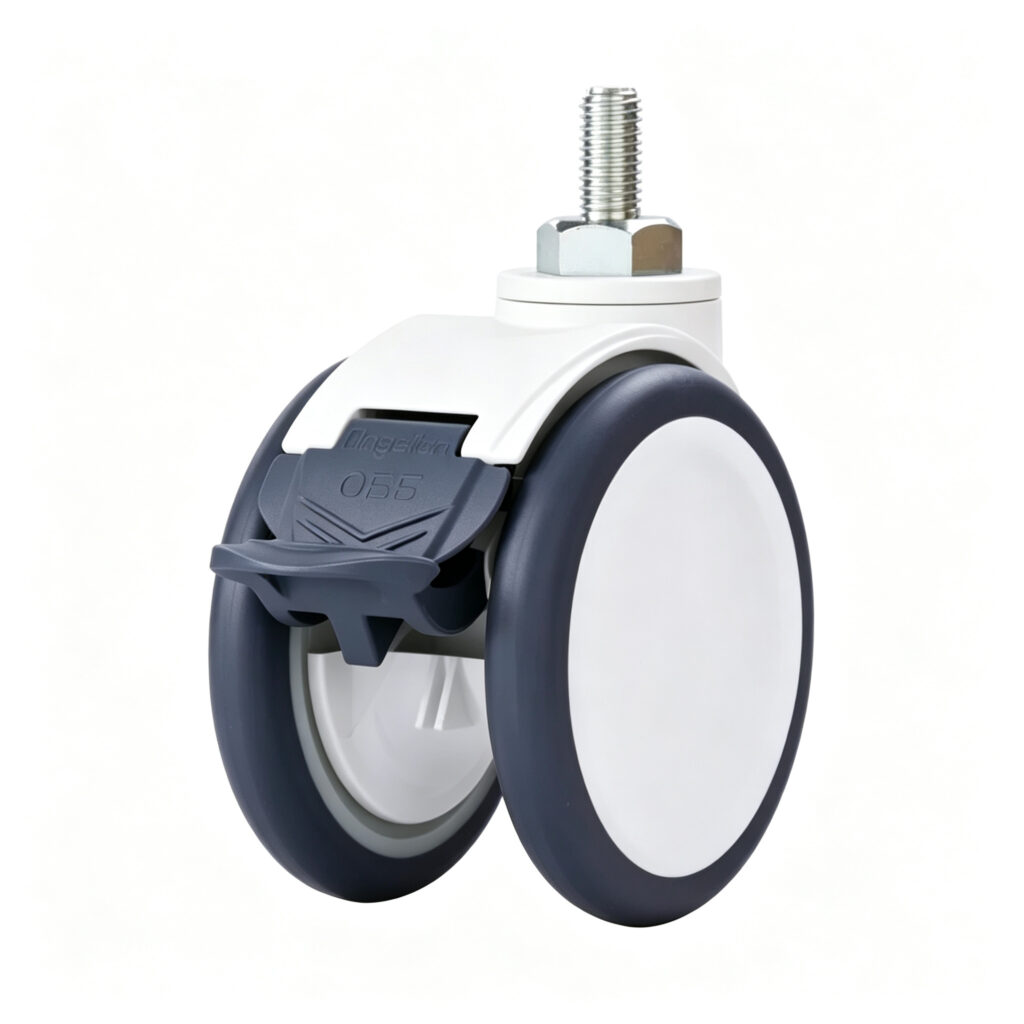
Medical casters play an essential role in hospitals, nursing homes, and healthcare facilities.
They affect equipment mobility, patient safety, noise levels, and overall maintenance costs.
When choosing medical casters, one of the most common questions is:
Should you choose twin wheel medical casters or single wheel medical casters?
Both designs have advantages depending on the application. This guide compares twin wheel vs single wheel medical casters based on stability, load capacity, maneuverability, and typical healthcare applications.
What Are Single Wheel Medical Casters?
Single wheel medical casters use one larger wheel mounted on a fork. They are widely used on hospital beds, medical carts, and mobile equipment where smooth movement and easy maintenance are required.
Advantages of Single Wheel Medical Casters
- Smoother rolling performance: A larger single wheel usually provides better movement over floors, thresholds, and small obstacles.
- Lower rolling resistance: Single wheel designs require less force to push, making equipment easier to move.
- Simple maintenance: Fewer components make replacement and inspection easier.
- Good directional stability: Suitable for straight-line movement of hospital beds and equipment.
Common Applications
- Hospital beds
- Patient transport stretchers
- Medical carts
- Operating room equipment
- Mobile diagnostic devices
What Are Twin Wheel Medical Casters?
Twin wheel medical casters feature two wheels mounted side by side on the same caster housing. This design increases the contact area with the floor and improves stability.
Advantages of Twin Wheel Medical Casters
- Higher stability:
The two-wheel structure distributes weight more evenly and reduces wobbling during movement. - Better load distribution:
Twin wheels can support heavier medical equipment while reducing stress on each wheel. - Improved maneuverability:
They provide better swivel performance in tight spaces such as hospital rooms and elevators. - Floor protection:
The wider footprint helps reduce pressure points on hospital flooring.
Common Applications
- Electric hospital beds
- Heavy-duty patient beds
- Medical robots
- Large healthcare equipment
- Hospital furniture
Twin Wheel vs Single Wheel Medical Casters Comparison
| Feature | Twin Wheel Medical Casters | Single Wheel Medical Casters |
|---|---|---|
| Stability | Excellent, especially for heavy loads | Good for standard applications |
| Load Capacity | Higher load distribution | Suitable for medium loads |
| Maneuverability | Excellent in tight spaces | Good directional movement |
| Rolling Resistance | Slightly higher | Lower rolling resistance |
| Maintenance | More components to inspect | Easier maintenance |
| Floor Protection | Better weight distribution | Good with proper wheel materials |
Which Medical Caster Is Better for Hospital Beds?
For modern hospital beds, twin wheel medical casters are often preferred because hospital beds are becoming heavier and require better stability.
Electric hospital beds, ICU beds, and adjustable patient beds usually benefit from:
- Higher load capacity
- Improved stability
- Better maneuverability in narrow areas
- Reduced floor pressure
However, single wheel medical casters remain a good choice for lightweight equipment where smooth rolling and simple maintenance are priorities.
How to Choose the Right Medical Caster?
Before selecting a medical caster, consider these factors:
1. Equipment Weight
Calculate the total load including the equipment, patient weight, and accessories. Heavy applications usually require twin wheel casters.
2. Floor Conditions
Hospitals typically use smooth vinyl, epoxy, or tile floors. Soft TPU wheels are commonly selected because they provide quiet operation and protect flooring.
3. Noise Requirements
Silent medical casters with TPU wheels are ideal for hospitals, nursing homes, and operating environments where noise reduction is important.
4. Locking System
Hospital beds often require central locking casters that allow caregivers to lock multiple wheels simultaneously for patient safety.
Twin Wheel Medical Casters for Modern Healthcare Equipment
As healthcare equipment becomes heavier and more mobile, twin wheel medical casters are becoming increasingly popular.
They provide better stability, improved load distribution, and easier movement in complex hospital environments.
For hospital beds, medical robots, and heavy healthcare equipment, selecting the correct caster design can improve safety, durability, and user experience.
Frequently Asked Questions
Are twin wheel medical casters stronger than single wheel casters?
Yes. Twin wheel casters generally provide better load distribution and stability, making them suitable for heavier medical equipment.
Are single wheel medical casters easier to push?
In many cases, yes. Single wheel designs often have lower rolling resistance and perform well for lighter equipment.
What wheels are best for hospital beds?
TPU medical caster wheels are commonly used because they provide quiet operation, durability, and floor protection. s need central locking casters?
Yes. Central locking systems improve safety by allowing caregivers to quickly secure the bed position.
Conclusion
Both twin wheel and single wheel medical casters have their own advantages. Single wheel casters are ideal for lightweight medical equipment requiring smooth movement, while twin wheel casters provide superior stability and load capacity for modern hospital beds and heavy healthcare applications.
Choosing the right medical caster depends on equipment weight, mobility requirements, floor conditions, and safety needs.
Related Articles
- How Much Weight Can Medical Casters Hold?
- Medical Casters vs Industrial Casters
- Medical Caster Maintenance Guide
- Common Reasons Hospital Bed Casters Fail
- Heavy Duty Casters
- Twin Wheel Casters
- Central Locking Casters
- Medical Casters Spotlight
- Are Twin-Wheel Casters Worth It?
- What Caster Wheels Do Hospitals Use?
- Hospital Bed Caster Replacement Guide
- Why TPU Medical Casters Reduce Noise in Hospitals
- Best Medical Caster Wheels for Hospital Beds

 English
  Japanese