
Central Locking Casters vs Total Lock Casters: Which Is Better for Hospital Beds?
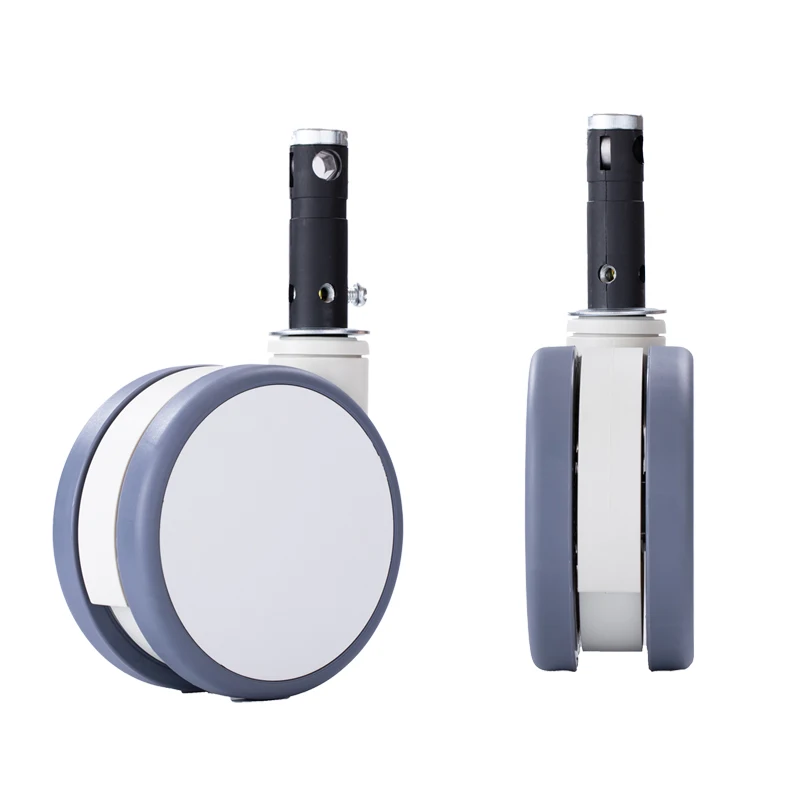
Choosing the right locking system is critical when selecting medical casters for hospital beds, patient stretchers, and healthcare equipment.
Two of the most common braking systems are:
central locking casters and total lock casters.
Although both systems help prevent unwanted movement, they work differently and are designed for different healthcare applications.
What Are Central Locking Casters?
Central locking casters are designed with a connected braking mechanism that allows multiple wheels to be locked or released through a single control pedal or lever.
Instead of manually locking each caster, healthcare staff can control all wheels simultaneously, improving efficiency and patient safety.
Advantages of Central Locking Casters
- Quick operation:
Caregivers can lock or unlock all casters from one location. - Improved patient safety:
Prevents hospital beds from moving unexpectedly during patient transfers or medical procedures. - Better workflow efficiency:
Staff do not need to check every individual wheel. - Ideal for modern hospital beds:
Especially suitable for ICU beds, electric beds, and advanced patient care equipment.
Common Applications of Central Locking Casters
- Electric hospital beds
- ICU beds
- Patient transport beds
- Emergency stretchers
- Operating room equipment
What Are Total Lock Casters?
Total lock casters combine two locking functions into one mechanism:
- Wheel rotation lock
- Swivel movement lock
When the brake is activated, the wheel stops rolling and the caster fork cannot swivel. This creates a stable fixed position.
Advantages of Total Lock Casters
- Maximum stability:
Locks both rolling and swiveling movement. - Simple design:
Each caster operates independently without complex linkage systems. - Reliable braking:
Provides strong positioning for carts and medical equipment. - Easy replacement:
Individual casters can be replaced without changing the entire locking system.
Common Applications of Total Lock Casters
- Medical carts
- Mobile equipment stands
- Emergency equipment
- Lightweight hospital furniture
- Healthcare transport carts
Central Locking Casters vs Total Lock Casters Comparison
| Feature | Central Locking Casters | Total Lock Casters |
|---|---|---|
| Locking Method | Multiple casters controlled together | Each caster locks individually |
| Brake Function | Usually controls several wheels | Locks wheel rotation and swivel |
| Safety Level | Excellent for patient beds | Good for mobile equipment |
| Operation | Fast and convenient | Manual locking required |
| Installation | More complex | Simple installation |
| Typical Use | Hospital beds and stretchers | Carts and medical equipment |
Which Locking Caster Is Better for Hospital Beds?
For modern hospital beds, central locking casters are usually the preferred choice.
Hospital environments require:
- Fast positioning during patient care
- Reliable bed stabilization
- Reduced caregiver workload
- Improved patient safety
Central locking systems allow nurses and medical staff to secure the entire bed quickly, which is especially important in emergency situations.
When Should You Choose Total Lock Casters?
Total lock casters are a good option when:
- The equipment is lighter
- Individual wheel control is acceptable
- The application requires simple maintenance
- Cost efficiency is important
Examples include medical carts, instrument stands, and portable healthcare equipment.
Central Locking Casters vs Total Lock Casters: Which One Should You Buy?
The best choice depends on the equipment type and operating environment.
| Application | Recommended Caster |
|---|---|
| Electric hospital beds | Central locking casters |
| ICU beds | Central locking casters |
| Patient stretchers | Central locking casters |
| Medical carts | Total lock casters |
| Mobile equipment | Total lock casters |
Why Locking Systems Matter in Medical Casters
Medical casters are not only about mobility. They are also about safety and control.
A reliable locking system helps:
- Prevent accidental movement
- Improve caregiver efficiency
- Protect patients during transfers
- Increase equipment stability
Frequently Asked Questions
What is the difference between central locking and total lock casters?
Central locking casters control multiple wheels through one mechanism, while total lock casters lock each caster’s wheel and swivel movement individually.
Are central locking casters better for hospital beds?
Yes. Central locking casters are commonly preferred for hospital beds because they provide faster operation and improved safety.
Do medical casters need brakes?
Yes. Braking systems are essential for hospital beds and medical equipment to prevent unwanted movement.
What type of caster is used on ICU beds?
ICU beds typically use heavy-duty medical casters with central locking systems for maximum stability and safety.
Conclusion
Central locking casters and total lock casters both provide reliable braking solutions, but they serve different purposes.
For hospital beds, ICU equipment, and patient transport systems, central locking casters offer superior convenience and safety.
For medical carts and smaller healthcare equipment, total lock casters provide a simple and cost-effective solution.
Selecting the correct locking system ensures better mobility, safer operation, and longer equipment life.
Related Articles
- Twin Wheel vs Single Wheel Medical Casters
- How Much Weight Can Medical Casters Hold?
- Medical Casters vs Industrial Casters
- Medical Caster Maintenance Guide
- Common Reasons Hospital Bed Casters Fail
- Heavy Duty Casters
- Twin Wheel Casters
- Central Locking Casters
- Medical Casters Spotlight
- Are Twin-Wheel Casters Worth It?
- What Caster Wheels Do Hospitals Use?
- Hospital Bed Caster Replacement Guide
- Why TPU Medical Casters Reduce Noise in Hospitals
- Best Medical Caster Wheels for Hospital Beds

 Japanese
  English